Type J vs. Type K: The Definitive Guide to Identifying Hot Runner Thermocouples
Eliminate temperature fluctuations and optimize your thermal balance with these professional field-testing techniques.
In high-precision injection molding, “close enough” isn’t good enough. A mismatch between your thermocouple and your temperature controller can lead to massive offsets, negative value displays, or catastrophic manifold overheating.
While Type J (Iron-Constantan) and Type K (Chromel-Alumel) sensors may look identical, their electrochemical profiles are worlds apart. Here is how to distinguish them in seconds.
1. The Magnet Test (The Field Favorite)
This is the most efficient method for on-site technicians.
Type J: The positive (+) lead is made of Iron, meaning it is strongly magnetic. A magnet will firmly snap to one of the wires.
Type K: The leads are primarily Nickel-based. The positive lead is non-magnetic, while the negative lead may exhibit very weak magnetism.
Pro Polarity Tip: If the magnet sticks to the Positive (+) wire, it’s a Type J. If it sticks (weakly) to the Negative (-) wire, it’s likely a Type K.
2. Color Coding Standards
Global standards vary, but most industry leaders (e.g., DME, Husky) follow these conventions:
| Standard | Type J | Type K |
|---|---|---|
| International (IEC 584) | Black (+) / White (-) | Green (+) / White (-) |
| American (ANSI) | White (+) / Red (-) | Yellow (+) / Red (-) |
| Jacket Color | Usually Black | Usually Yellow or Blue |
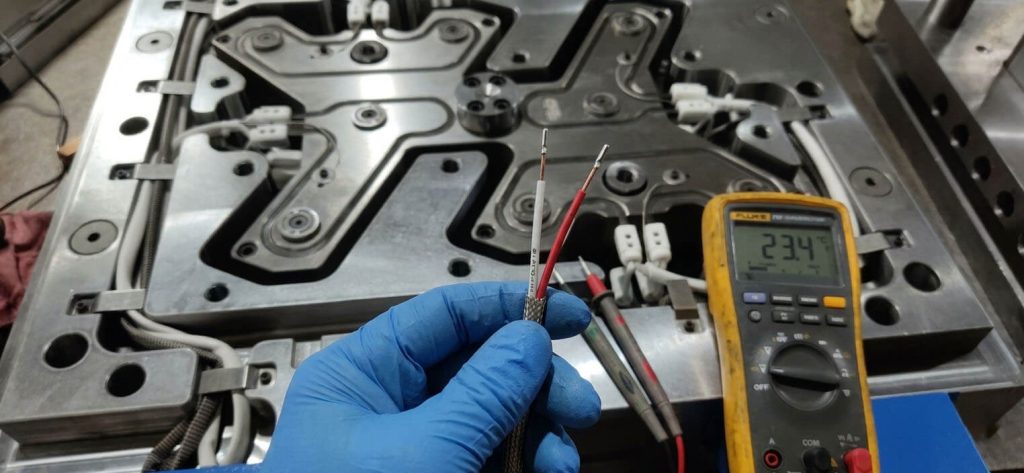
3. Multimeter Millivolt (mV) Verification
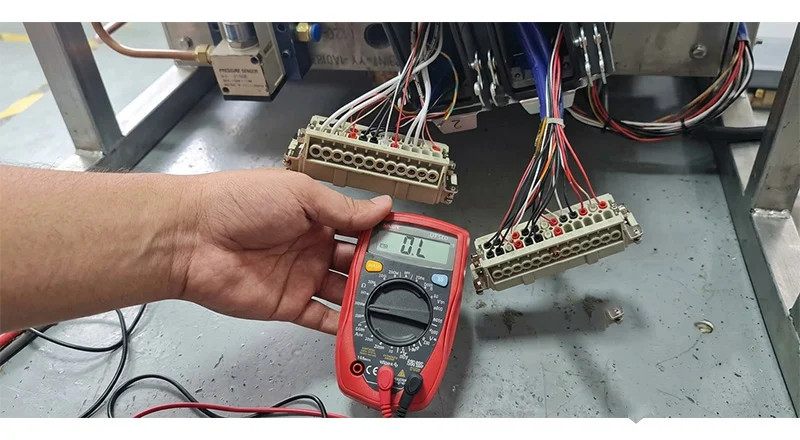
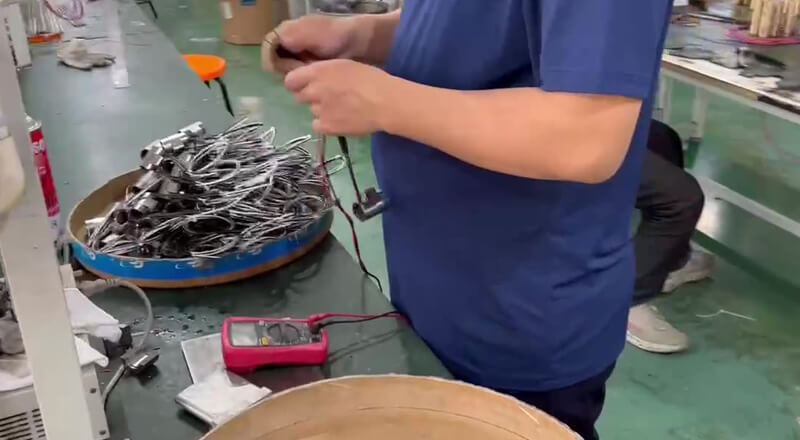
If you have a digital multimeter, you can use the Seebeck Effect to confirm the sensor type:
- Set to mV DC: Switch your meter to the millivolt range.
- Apply Heat: Connect the probes and warm the sensor tip with your hand or a heat gun.
Analyze the Output: Signal Strength: Type J is more sensitive, producing approximately 52 μV/℃. Type K produces a lower output of approximately 41 μV/℃.
Polarity: A positive reading confirms your red probe is on the positive (+) lead; a negative reading indicates reversed wires.
4. Physical & Material Inspection
When wires are stripped, a tactile and visual check provides the final clue:
Type J (Negative): The Constantan wire is often yellowish and relatively soft.
Type K (Negative): The Alumel/Silicide wire is typically greenish-gray and noticeably stiff or hard.
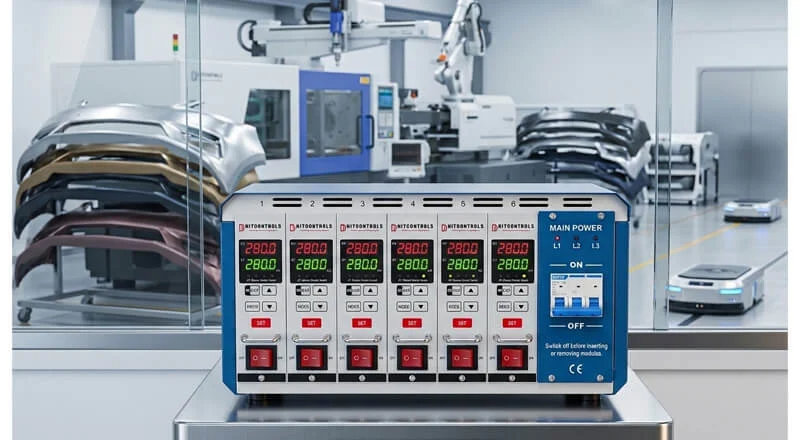
Correct identification ensures your PID controller’s compensation curves function as intended, protecting your mold and ensuring consistent part quality.