The Evolution of Hot Runner Temperature Controllers: From Basic Regulators to Smart Industry 4.0 Systems
1. The Genesis: Resistance Heating and Manual Control (1950s–1960s)
The roots of hot runner technology trace back to the 1950s, with the first commercial patent filed in 1963 in Canada.
Control Method: Initially, temperature regulation was extremely basic, relying on simple On/Off control or manual mechanical voltage regulation.
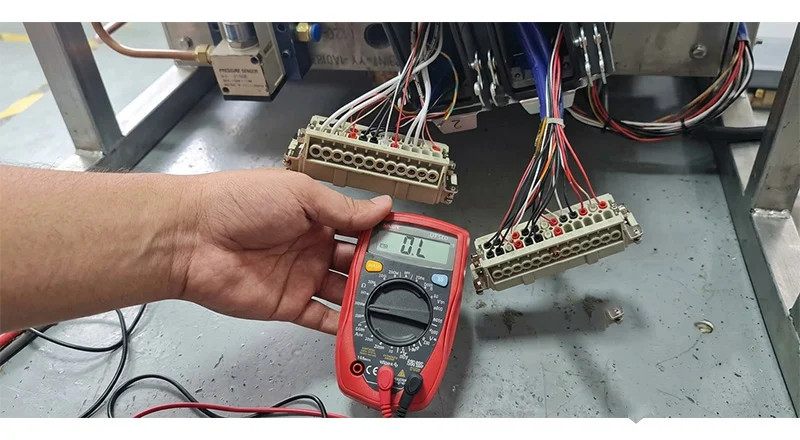
Challenges: Early systems lacked precise feedback mechanisms. Operators had to manually adjust heaters and thermocouples, often leading to unstable thermal environments, material leakage, or overheating.
- Control Zones: These systems typically managed only a single or very few zones, limiting their use to simple mold designs.
2. The Foundation: Analog Circuits and PID Technology (1970s–1980s)
As the demand for plastic parts grew, the 1970s and 80s marked the transition toward more professionalized equipment.
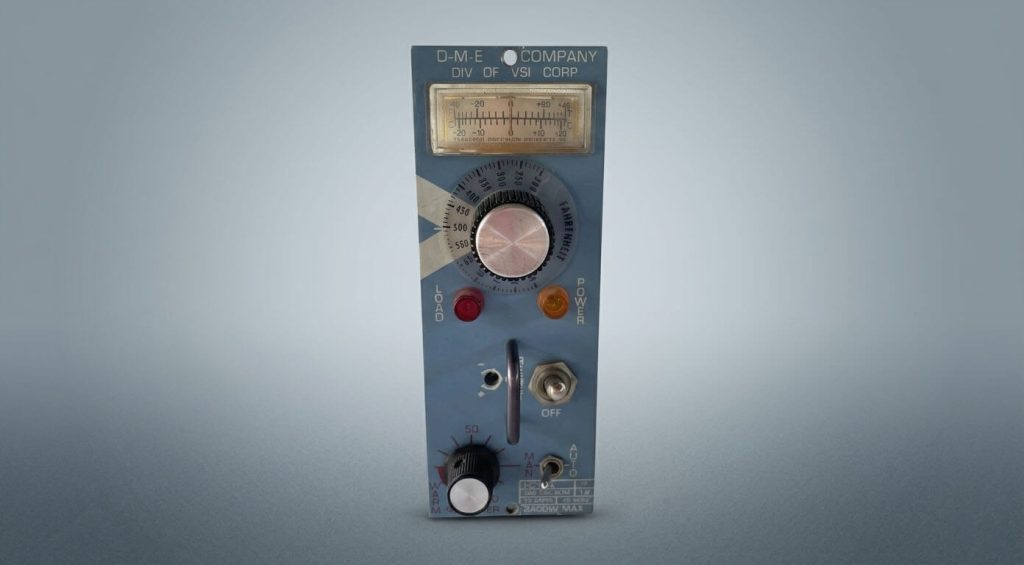
- Control Method: This era saw the introduction of Analog Circuit Control and the revolutionary PID (Proportional-Integral-Derivative) algorithm. PID control allowed for continuous and precise power adjustment, significantly stabilizing mold temperatures compared to the old “On/Off” methods.
- Interface: Control panels were dominated by analog dials, rotary knobs, and needle-style voltmeters.
- Applications: The focus shifted toward reducing waste as raw material prices rose, making hot runners more attractive for general industrial use.
3. The Digital Era: Microprocessors and Multi-Zone Control (1990s–Early 2000s)
Digital technology redefined the capabilities of temperature controllers at the turn of the century.
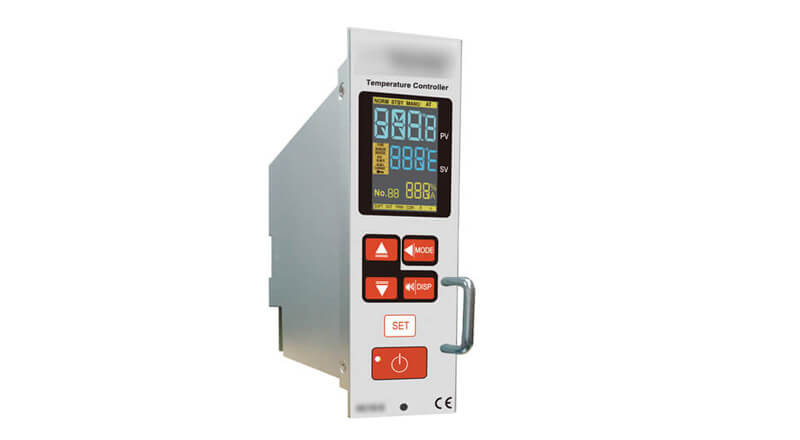
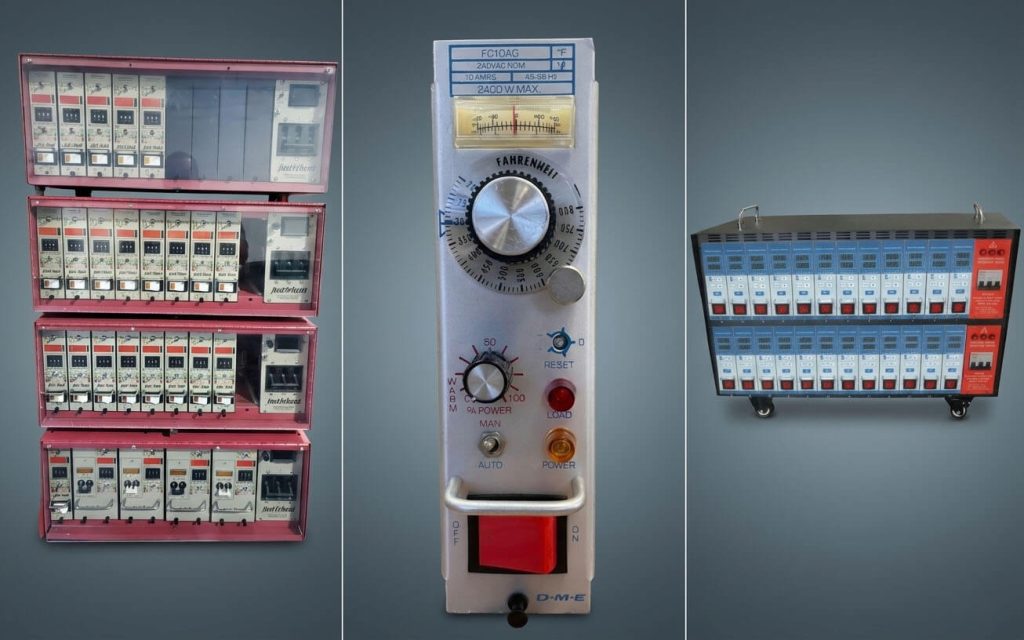
- Control Method: Digital Microprocessor Control replaced analog circuits, offering higher logic processing speeds and accuracy.
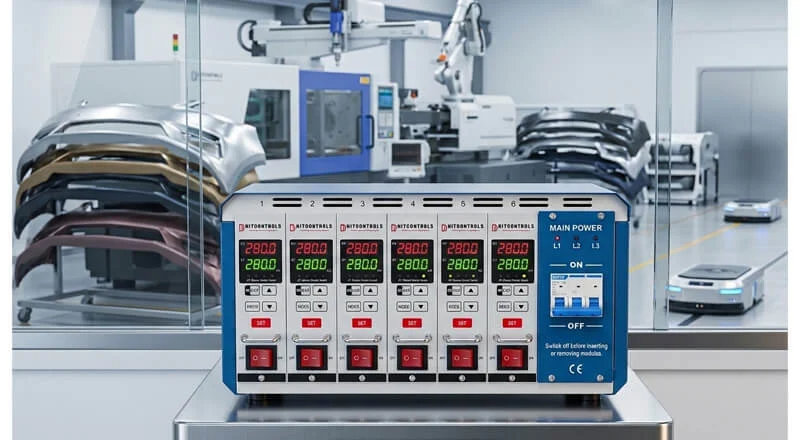
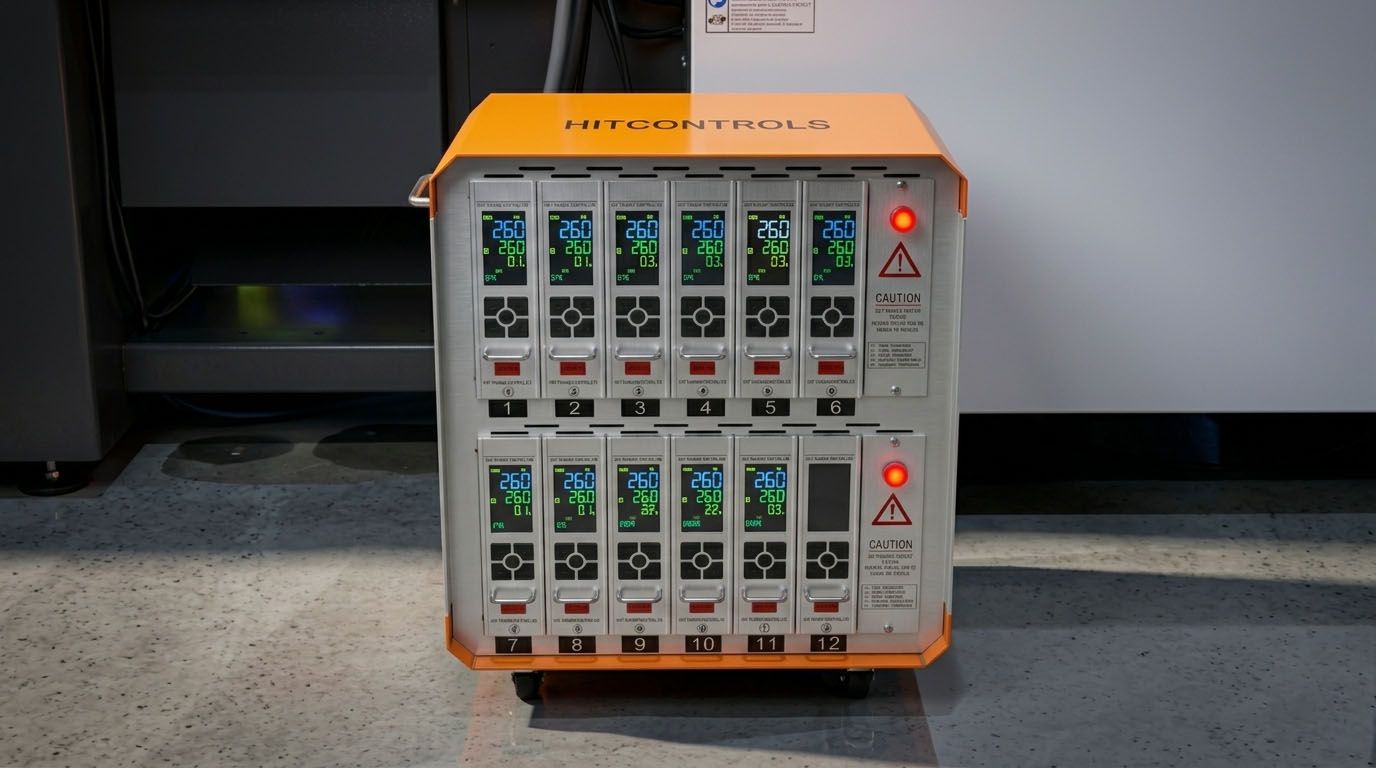
- Expansion of Zones: As molds became more complex, controllers evolved to support Multi-Zone configurations. While up to 12 zones remained a popular standard for mid-scale applications , systems capable of handling 48 to 72 zones became common for larger production lines.
- Features: Introduction of digital displays, fault alarms (such as thermocouple breaks), and soft-start functions to protect heaters from moisture.
4. The Modern Frontier: Intelligence and Industry 4.0 (2010s–Present)
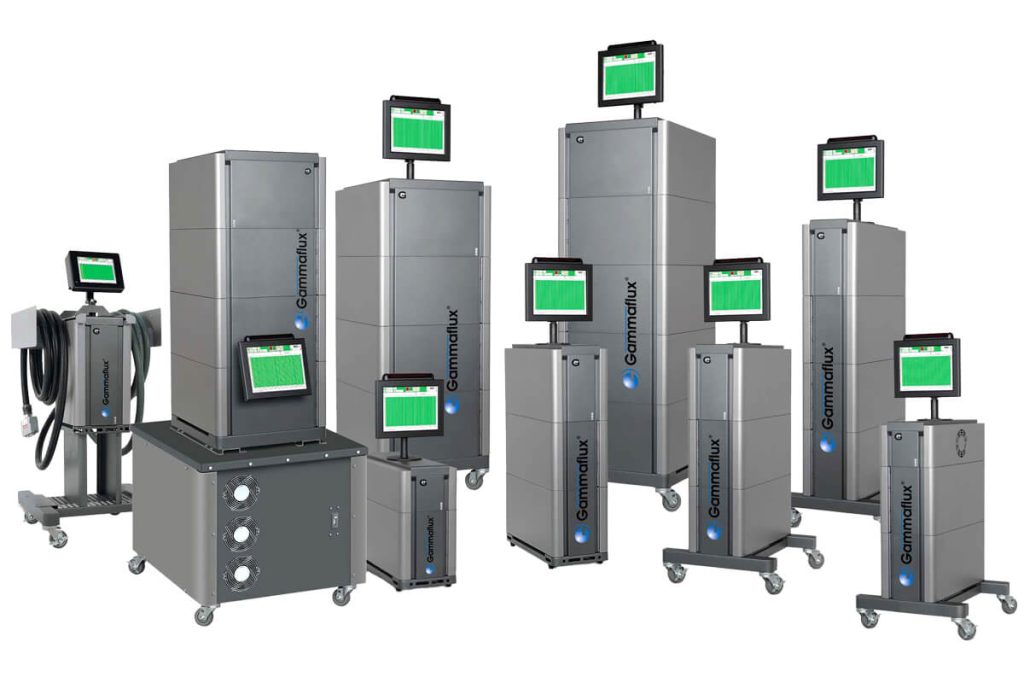
Today, hot runner temperature controllers are no longer just “boxes” but integrated data hubs for the smart factory. Such as the TSC-300 series, feature 10.4″ tiltable touch screens.
- Control Method: Integration via Ethernet, OPC-UA, MQTT, VNC. They offer real-time monitoring and can communicate directly with the injection molding machine for synchronized production.
- Point Counts: High-cavity molding (e.g., for medical or packaging) now requires massive scale, with advanced controllers supporting above 216 zones.
- Interface: Large, user-friendly Touch Screens have replaced traditional buttons, providing intuitive graphical data and historical logs.
What started as a lab experiment in Canada has become a cornerstone of global manufacturing. Brands like Hitcontrols continue this legacy by combining high-precision algorithms with modular, energy-efficient designs. As we move toward Industry 4.0, the hot runner controller will remain the key to unlocking the next level of production excellence.
Application Fields
The application of hot runner temperature controllers has expanded alongside these technical milestones:
- Automotive (33.5% Market Share): Currently the largest sector, driven by the need for lightweight EV components and complex interior/exterior parts with tight tolerances.
- Packaging (25%): Focuses on high-volume, multi-cavity molds for caps and containers, where reducing cycle time is critical.
- Electronics (20%): Demands extreme precision for delicate housings and connectors.
- Medical & Healthcare (10%): The fastest-emerging sector, requiring strict compliance, safety, and defect-free molding for surgical instruments and diagnostic tools.
From a simple resistance heater to an IoT-enabled smart system, the hot runner temperature controller has become the core of molding excellence. Future innovations will likely focus on even greater energy efficiency, tighter thermal regulation, and seamless integration into fully automated “lights-out” manufacturing environments.