The Hidden Variable in Multi-Cavity Molding: The Shear-Induced Flow Imbalance
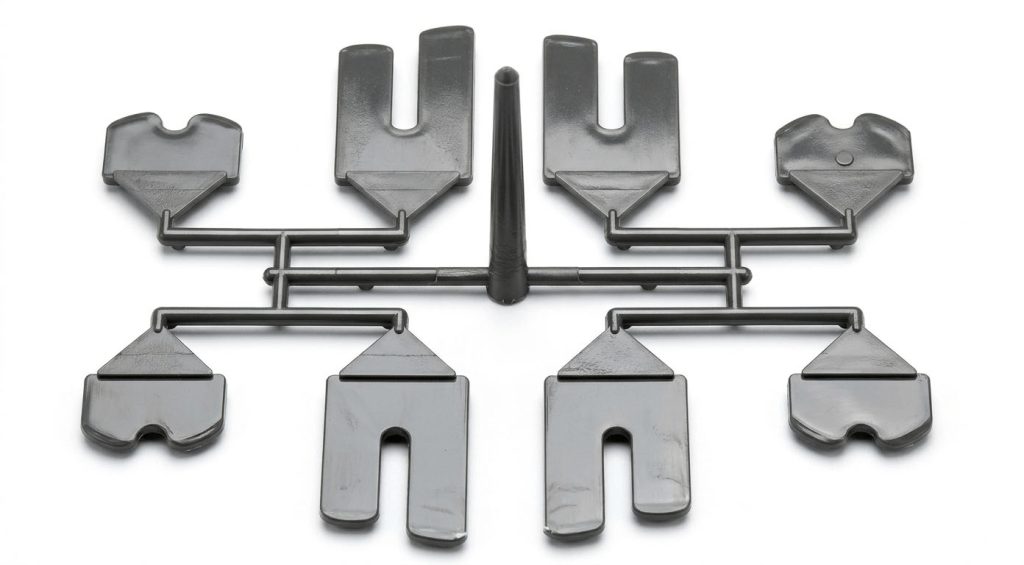
In the world of high-precision injection molding, “naturally balanced” runner systems are often considered the gold standard for uniformity. However, many molders still face frustrating cavity-to-cavity variations—differences in part weight, dimensions, and aesthetic quality—despite having geometrically identical runners. The culprit? A complex rheological phenomenon known as Shear-Induced Flow Imbalance.
What is Shear-Induced Flow Imbalance?
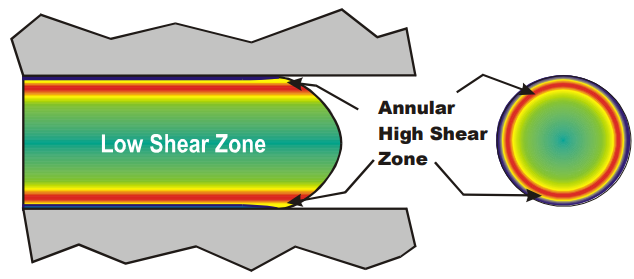
As molten plastic flows through a runner, it doesn’t move as a uniform mass. Due to laminar flow and high perimeter shear, the material near the runner walls experiences intense friction, causing it to become significantly hotter and less viscous than the core material.
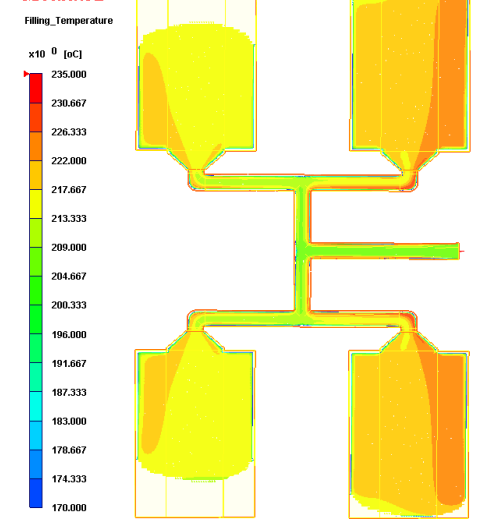
The Stratification: Temperature spikes can exceed 50°C (90°F) in these outer laminates.
The Branching Conflict: When a runner branches, this high-sheared, “hotter” material is unevenly distributed into different cavities, creating “Flow Groups” with distinct properties.
The Real Cost of Ignoring the Imbalance
Failure to account for shear effects isn’t just a technical oversight; it’s a bottom-line drain:
Extended Commissioning: Weeks of “debugging” to achieve acceptable parts from all cavities.
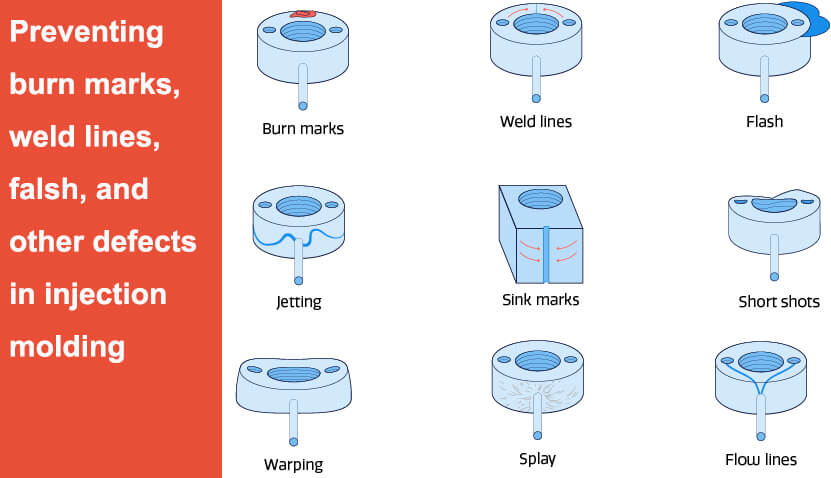
Narrow Process Windows: Small changes in fill speed can lead to flash in one cavity and short shots in another.
Quality Variations: Significant dimensional deviations (up to 0.2 mm or more) that traditional steel adjustments cannot fix.
Our Professional Approach: From Diagnosis to Solution
At HITCONTROLS, we utilize advanced Flow Grouping Diagnostics to isolate shear-induced effects from steel variations. By analyzing melt rotation and thermal distribution within the manifold, we ensure:
Axisymmetric Distribution: Balancing high and low sheared laminates across all branches.
Optimized Hot Runner Design: Eliminating “dead regions” and ensuring consistent melt history.
Predictable Production: Faster mold approval and reduced scrap rates for high-cavitation tools.
Understanding the science of the melt is the first step toward manufacturing excellence. Don’t let your “balanced” mold be the source of unbalanced profits.